Planning Life Around 12-Hour Shifts: A Nurse's Guide to Schedules, Sleep and Days Off
Regular planners assume a 9-to-5. Nurses, CNAs, techs and other shift workers live on rotating schedules, stretches of 12-hour shifts, nights that flip your body clock, and days off that disappear into laundry and sleep. Planning that life takes a slightly different system.
Here's a practical one, from people who know that "just get eight hours" is easier said than done after a run of nights.
1. Put the whole rota on one calendar first
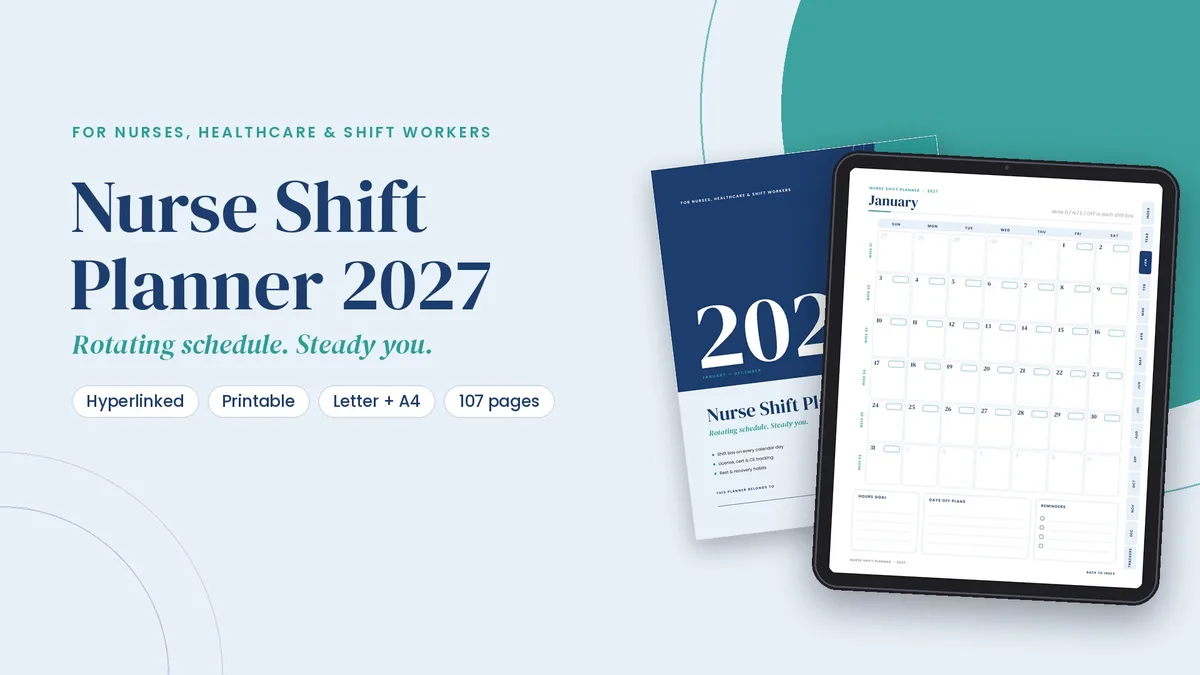
The moment your schedule is released, copy every shift onto a monthly calendar. Use a simple code (D for days, N for nights, O for off), or colour-code them. Seeing the whole month at once is what lets you plan everything else: appointments, family events and real rest.
2. Plan around your shift blocks, not the week
Shift workers don't have a "Monday." Think in blocks instead:
- Before a block: groceries, meal prep, clean scrubs, errands done.
- During a block: work, eat, sleep. Nothing else on the list.
- After a block: a recovery day before any big plans.
3. Protect your sleep after nights
Night shifts are hard on the body, and a plan helps:
- Keep the same sleep window on consecutive nights where you can.
- Make the bedroom dark, cool and quiet. Blackout curtains and earplugs make a real difference.
- On your first day off, take a shorter sleep in the morning and go to bed at a normal time to switch back.
- Write down what helps you personally; everyone's body responds differently.
(If you're struggling with sleep or fatigue, talk to occupational health or your doctor.)
4. Track hours, overtime and pay
Pay mistakes happen, especially with differentials, overtime and swapped shifts. Log every shift you work, including any swaps, and check each paycheck against your log. It takes two minutes a week and can catch real money.
5. Keep licenses and CE credits in one place
Note your license renewal date, your certifications (BLS, ACLS and so on) with their expiry dates, and every continuing education credit as you earn it. Renewal time becomes a five-minute job instead of a frantic search.
6. Plan your PTO early
Look at the year ahead and request time off around the dates that matter: holidays, birthdays, a real vacation. PTO that's planned gets used; PTO that isn't tends to vanish.
7. Use a brain sheet on shift
A one-page brain sheet per shift (patients, meds, tasks, notes) keeps your head clear during a busy shift. Follow your unit's policies on what can be written down.
A planner built for shift work
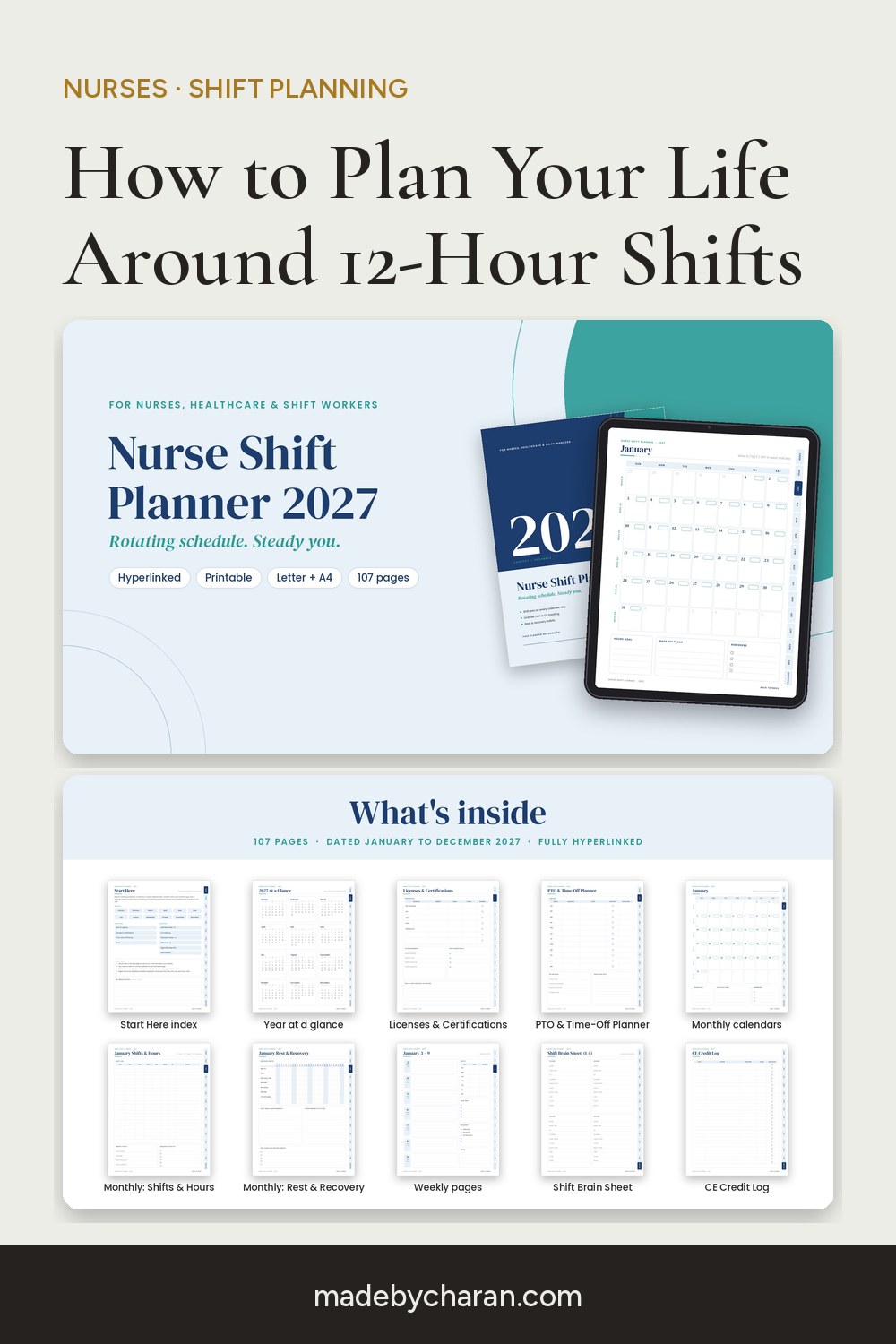
The 2027 Nurse Shift Planner is designed around all of this:
- Year: a licenses and certifications page, and a PTO and time-off planner.
- Every month: a shifts and hours page, plus a rest and recovery page.
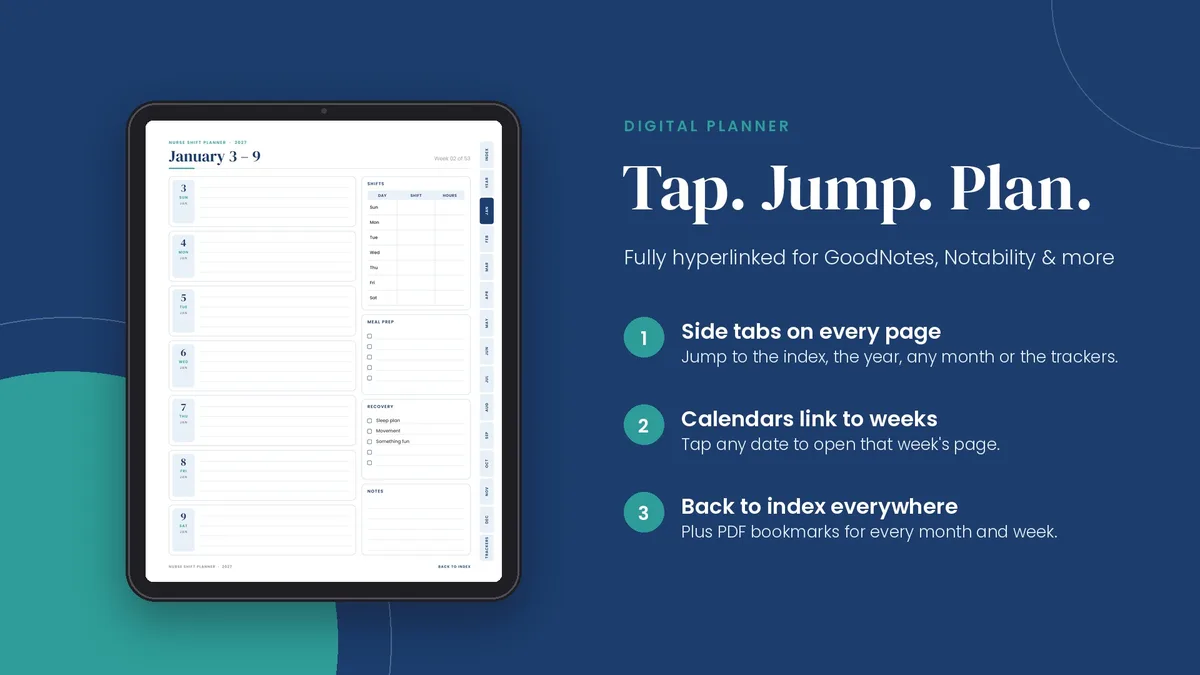
- Every week: 53 weekly pages with a shift-worker sidebar.
- Trackers: shift brain sheets, a CE credit log, a paycheck tracker, a shift swap log, a night shift sleep plan and unit contacts.
It's 107 pages, hyperlinked for tablets and printable in US Letter or A4.
It also makes a thoughtful gift for a nursing student or a new grad.
Save this for later: pin the image below to your Pinterest board.